Edit
EU Commissioner urges Serbia to reform amid political stalemate and student protests
Marta Kos’s visit also highlighted tensions over Serbia’s democratic backsliding
EU Commissioner for Enlargement Marta Kos concluded a high-stakes visit to Serbia on Tuesday (29 April), pressing the country’s leadership to accelerate democratic reforms as Serbia grapples with a deepening political crisis.
The visit comes amid months of student-led protests accusing President Aleksandar Vučić of authoritarianism and systemic corruption, triggered by a deadly train station canopy collapse in Novi Sad last November that killed 16 people.
Kos met with Serbia’s new Prime Minister Đuro Macut, a political novice appointed earlier this month, and Vučić, who has faced growing criticism for stifling democratic freedoms. In a press conference following talks with Macut, Kos emphasized that Serbia’s EU membership bid hinges on urgent reforms to the judiciary, media, and election laws. “Without these changes, Serbia cannot advance,” she stated, aligning the EU’s expectations with the demands of protesters, including students, teachers, and farmers.
The protests, which have swelled into the largest anti-government demonstrations in decades, were sparked by public outrage over alleged corruption linked to the Novi Sad tragedy. Students have blockaded key institutions, including the headquarters of Radio-Television Serbia (RTS), demanding impartial media coverage and accountability. On Monday, police in Novi Sad used batons and pepper spray to disperse protesters at a sports faculty building, escalating tensions. According to N1, Kos expressed support for the students’ calls for reform, noting that their demands “align to a great extent” with the EU’s requirements for Serbia’s accession process.
In a statement to BETA, Kos reiterated her commitment to engaging with civil society, announcing plans to meet with students and civic organizations on Wedesday. “I am going to support Serbia and its citizens in their European aspirations,” she said, acknowledging the efforts of students who have cycled to Strasbourg and are running to Brussels to draw attention to their struggle for justice and the rule of law. However, many pro-democracy Serbs remain sceptical, viewing the EU’s response to Vučić’s increasingly authoritarian governance as insufficient.
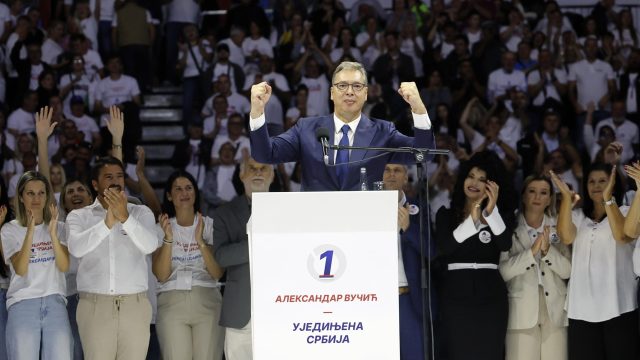
Vučić, in power since 2012 as either prime minister or president, has maintained a delicate balancing act between Serbia’s EU aspirations and its historic ties to Russia. During Kos’s visit, he downplayed its significance, stating he expected “nothing special” from the discussions. Vučić also confirmed his attendance at a May 9 military parade in Moscow, signaling continued alignment with Russian President Vladimir Putin. Critics argue that Vučić’s reluctance to fully commit to EU reforms stems from his reliance on authoritarian tactics to maintain power, including media control and electoral irregularities.
The appointment of Macut, a 62-year-old endocrinologist with no prior political experience, has done little to quell public discontent. Protesters, who forced the resignation of former Prime Minister Miloš Vučević in March, have called for a transitional government and Vučić’s resignation, demands Macut’s nomination fails to address. According to BETA, opposition groups and student leaders view Macut as a loyalist chosen to preserve Vučić’s grip on power, further deepening the political stalemate.
Kos’s visit also highlighted tensions over Serbia’s democratic backsliding. In March, she publicly urged Serbian leaders to exclude pro-Russian figure Aleksandar Vulin from the new cabinet, a move that led to his removal as deputy prime minister. However, concerns persist about the EU’s broader approach to Serbia. Opposition-minded circles have criticized the EU’s silence following allegations of illegal acoustic cannons used against protesters on 15 March, raising questions about its commitment to democratic principles.
The European Parliament’s Foreign Affairs Committee recently expressed regret over the Serbian government’s failure to meet protesters’ demands, which it said align with EU accession requirements.
As Serbia navigates this critical juncture, Kos’s visit underscores the EU’s push for reform but also exposes the challenges of engaging with a government accused of democratic erosion. With students vowing to continue their protests and Vučić showing no signs of conceding, the path to EU integration remains fraught. “The EU is following the situation closely,” Kos said, calling for de-escalation and dialogue. Yet, for many Serbs, the question remains whether Brussels will back its words with decisive action
Updated: April 30, 2025 - 04:14