Edit
EU bypasses Hungary’s veto to advance Ukraine’s accession talks
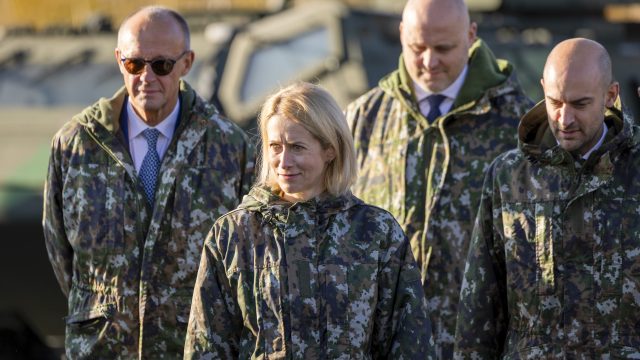
Danish Minister for European Affairs Marie Bjerre expressed pride in the "new technical approach"
In a breakthrough for Ukraine’s EU ambitions, Denmark – holding the rotating Council presidency until 31 December 2025 – orchestrated a clever workaround to Hungarian Prime Minister Viktor Orbán’s longstanding veto.
On 11 December, during an informal ministerial meeting in Lviv, Ukraine, the EU launched “frontloading”: a technical process allowing substantive accession negotiations to proceed without formally opening the blocked clusters.
This innovative approach, developed jointly by the Danish presidency and the European Commission, unblocks technical work on Ukraine’s path to membership despite Budapest’s opposition. Hungarian diplomats attended the Lviv gathering, lending tacit acceptance rather than boycotting the initiative.
Enlargement requires unanimity among the 27 member states, and Orbán has consistently blocked the formal opening of negotiation clusters, citing concerns over the ongoing war and minority rights. Efforts to persuade him over the past six months failed, threatening to overshadow Denmark’s presidency, which prioritised Ukraine’s bid.
The solution: frontloading
Clusters remain formally unopened, but the EU handed Ukraine its Draft Common Positions (DCPs) – detailed negotiating frameworks – for three key clusters: Fundamentals (rule of law, democracy, justice); Internal Market (the largest and most complex); and External Relations (expected to advance quickly). The remaining three clusters are slated for early 2026 under the incoming Cypriot presidency.
Danish Minister for European Affairs Marie Bjerre expressed pride in the “new technical approach,” noting disappointment over Hungary’s intransigence but emphasising progress: “Even if formally blocked, we can continue the technical work.”
EU Enlargement Commissioner Marta Kos reinforced this, stating there is “a list of reforms, and nobody can veto Ukraine from doing these reforms.”
In practice, Ukraine now has clear benchmarks – interim and closing criteria agreed by all 27 states – for aligning its laws with EU standards. The Commission will continuously assess progress, mirroring a full negotiation process. Once Hungary lifts its veto, clusters could be opened and closed rapidly in a single session, accelerating readiness for accession.
This applies similarly to Moldova, linked in the same candidate package. Alongside frontloading, Ukraine and the EU endorsed priority reform roadmaps in anti-corruption and justice, underscoring that standards remain rigorous.
Deputy Prime Minister Taras Kachka welcomed the move, stressing: “Now it’s 100% about Ukrainian reforms.” Speed depends entirely on Kyiv’s implementation in parliament and government.
Formal hurdles persist: opening and closing chapters still require unanimity under EU treaties. Resolution likely awaits Hungary’s April 2026 elections, where Orbán’s Fidesz faces a strong challenge from opposition forces
.Yet the Lviv outcome shifts momentum. As Bjerre confidently predicted: “When the blockade is lifted – and I’m quite confident that it will be – we can very speedily open and close these clusters, making Ukraine ready for the EU.”
For war-torn Ukraine, time is critical. This Danish-led plan offers acceleration without compromise, framing membership as a vital security guarantee amid Russia’s invasion. Responsibility now rests squarely with Kyiv to deliver reforms – a pivotal step toward eventual integration.
A longer version of this article by Sergiy Sydorenko, chief editor of European Pravda, can be found here.
Caption: Denmark’s Minister for European Affairs Marie Bjerre speaks during a debate on ‘EU position on the proposed plan and EU engagement towards a just and lasting peace for Ukraine’ at the European Parliament in Strasbourg, France, 26 November 2025. The current plenary session runs from 24 until 27 November 2025. EPA/RONALD WITTEK
Updated: December 14, 2025 - 09:19