Edit
EU bolsters sanctions on pro-Russian groups undermining Moldova
The country's parliamentary elections on 28 September face significant challenges as Russia intensifies its hybrid warfare
The Council of the European Union imposed on 15 July new sanctions targeting seven individuals and three entities accused of undermining Moldova’s sovereignty, democracy, rule of law, and stability.
Moldova’s parliamentary elections on 28 September face significant challenges as Russia intensifies its hybrid warfare to undermine the country’s pro-European trajectory, exploiting its vulnerabilities as a former Soviet republic. The Kremlin’s tactics include widespread disinformation campaigns, cyberattacks, and vote-buying schemes, as seen in the 2024 presidential election and EU referendum, where fugitive oligarch Ilan Shor (Șor), backed by Moscow, funneled over $39 million to influence 138,000 voters, particularly in pro-Russian regions like Gagauzia.
Transnistria, a breakaway region of Moldova along the Ukrainian border, has been under de facto Russian control since the early 1990s, hosting Russian troops and operating as a Kremlin-backed separatist enclave with its own government, currency, and security forces.
The sanctions focus on close associates of Ilan Shor, previously listed by the EU for illegal political party financing and incitement to violence.
The newly designated individuals include leaders and members of organisations that are legal successors to the banned ȘOR political party. Some of these individuals were actively involved in voter bribery schemes during the 2024 elections and referendum, as well as corrupt dealings with Moldovan politicians.
The sanctioned entities include the company A7 with ties to Moscow, linked to efforts to influence the 2024 presidential elections and constitutional referendum. The restricted list also includes Victory/Pobeda Political Bloc, founded by Shor, implicated in spreading disinformation and engaging in vote-buying schemes. Also Cultural Educational Centre of Moldova, accused of facilitating electoral interference in the 2024 presidential elections.
With these additions, the EU’s restrictive measures now apply to 23 individuals and five entities. Those listed face asset freezes, prohibitions on accessing economic resources, and travel bans preventing entry or transit through EU member states.
The EU established its sanctions framework for Moldova in April 2023 at the request of the Moldovan government to counter threats to the country’s sovereignty and independence. Notable figures previously sanctioned include oligarchs Vladimir Plahotniuc and Ilan Shor, as well as senior ȘOR party MP Marina Tauber. Last April the EU extended these measures until 29 April, 2026.
EU foreign policy chief Kaja Kallas emphasised Moldova’s role as a primary target of Moscow’s hybrid warfare. She announced increased EU support for Chisinau ahead of Moldova’s parliamentary elections to safeguard democratic processes from external interference. Kallas stated, “The EU is ready to protect Moldova’s democratic process from external influence.”
Challenges in EU sanctions policy
On the same day, Kallas reported a failure to reach an agreement on new sanctions against Russia during a meeting of European foreign ministers in Brussels. Slovakia’s reluctance, driven by domestic political concerns, has stalled progress.
Slovakia and Malta stall EU’s 18th sanctions package against Russia
Slovak Prime Minister Robert Fico demanded a legal exemption to continue purchasing Russian gas until 2034, a proposal the European Commission has rejected as undermining the sanctions’ purpose. Fico’s veto highlights tensions, as energy imports are seen as a key revenue source for Russia’s war efforts in Ukraine.
Concerns about Slovakia’s trajectory were raised by European lawmakers. Sophie Wilmés, European Parliament vice president and chair of the civil liberties committee, warned, quoted by Politico, that Slovakia risks becoming “the next Hungary” due to similar patterns in governance. This follows a June fact-finding mission to Bratislava by the Parliament’s rule of law watchdog.
Kallas expressed optimism about resolving the deadlock, noting ongoing technical talks and Slovakia’s nearing agreement. She stressed the need for sanctions to limit Russia’s war capabilities and urged transatlantic cooperation to pressure Russian President Vladimir Putin to negotiate.
Kallas also welcomed U.S. President Donald Trump’s pledge to supply more weapons to Ukraine but called for shared financial responsibility, noting, “If someone else pays for the weapons, the U.S. cannot claim sole credit.”
The EU is considering further measures, including potentially lifting Georgia’s visa-free regime and imposing sanctions due to recent political developments.
Discussions on using seized Russian assets to fund Ukraine’s defense continue, with Kallas noting public demand for Russia to bear the cost of damages caused. These talks are set to resume in August.
The European Council’s 26 June conclusions reaffirmed the EU’s commitment to supporting Moldova against Russia’s persistent destabilizing activities, including hybrid attacks targeting democratic institutions.
These efforts have intensified since Russia’s invasion of Ukraine, posing a direct threat to the stability and security of the EU’s external borders.
Moldova-EU summit highlights urgent push for membership talks amid Russian hybrid threats
Other sources: Politico, European Council press releases
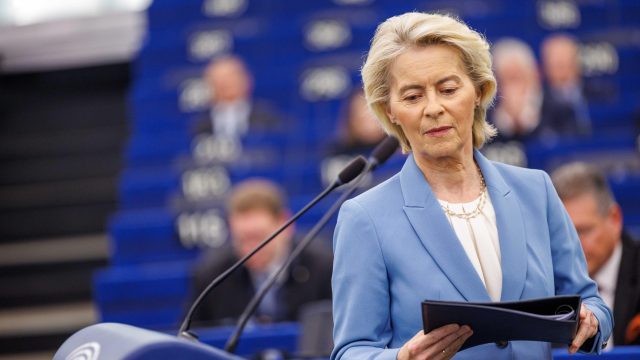
Caption: EU Ministers of Foreign Affairs meet on 15 July 2025 in Brussels. The meeting is chaired by Kaja KALLAS, EU High Representative for Foreign Affairs and Security Policy, 15 July, European Council Newroom
Updated: July 16, 2025 - 06:11