Edit
Denmark dismantles its agricultural past: a radical pivot to green farming
The Prime Minister's decision to abolish the century-old Ministry of Agriculture marks a seismic shift in priorities, challenging the dominance of intensive livestock farming
When Danish Prime Minister Mette Frederiksen unveiled her new 21-member cabinet in early June, one notable absence sent ripples through the agricultural community. There was no new Agriculture Minister.
Far from an oversight, this reflected a deliberate choice: the Danish government has abolished the Ministry of Food, Agriculture, and Fisheries entirely. Denmark thus became the first European Union country without a dedicated ministry for the agri-food sector. Responsibilities have been redistributed, primarily to a new Ministry of Nature and Animal Welfare, with the broader agenda now spanning five different ministries.
The move represents more than bureaucratic reshuffling. It signals a profound reassessment of agriculture’s place in modern Danish society, one that prioritizes environmental protection, animal welfare, and climate goals over traditional industry structures.
The erosion of agriculture’s historic dominance
The Ministry of Food, Agriculture, and Fisheries had stood since 1896 as the institutional anchor for a sector long central to Denmark’s identity and economy. For generations, farming shaped the national narrative of progress and prosperity. Yet that era is fading. Before 1950, agriculture contributed around 20% of Denmark’s GDP; today, that figure has shrunk to approximately 2%. Employment has plummeted from 525,000 to about 63,000 people, just over 2% of the workforce, with the number of farms continuing to decline steadily.
Agricultural journalist Kjeld Hansen described the change as “a real earthquake” shaking Axelborg, headquarters of Denmark’s main farmers’ organisation. Historian Esben Bøgh Sørensen sees it as the end of Denmark’s self-image as an agricultural powerhouse. While the sector’s domestic economic footprint has diminished, it retains outsized importance in exports, accounting for roughly 13% of goods sold abroad. Denmark maintains a strongly positive agricultural trade balance, unlike many European peers.
At the heart of this success and controversy lies the pig industry. With a population of about six million, Denmark raises nearly 30 million pigs annually, exporting around 90% of production as live animals or processed meat. It ranks among the world’s top pork exporters. Roughly 80% of Danish agricultural land supports feed for livestock, particularly pigs.
However, this model of intensive farming has increasingly clashed with societal values. Factory farms face accusations of generating excessive slurry, polluting waterways, and compromising animal welfare. Public scrutiny intensified during the March elections, dubbed the “pig election,” fueled by investigative documentaries and books exposing conditions inside large operations. Polling showed overwhelming support for protecting drinking water, with 95% of Danes demanding urgent action.
A new vision for food production and climate leadership
The Frederiksen government’s reforms aim to transform the sector fundamentally. Public support will shift from land ownership volume toward rewards for collective benefits: nature conservation, emission reductions, water protection, and higher animal welfare standards. Copenhagen is accelerating its climate ambitions, targeting an 85% reduction in greenhouse gas emissions by 2035 and full climate neutrality by 2045.
Planned measures include stricter pesticide restrictions near groundwater reserves, a national food strategy to boost domestic fruits, vegetables, and legumes, and promotion of local and organic products. Discussions involve halving VAT on all foods and eliminating it for fruits and vegetables. The new Nature and Biodiversity Act seeks to protect 30% of Denmark’s land, with 10% under stricter safeguards. From 2030, Denmark aims to become the first country to tax livestock carbon emissions.
Prime Minister Frederiksen has been blunt: the intensive pig farming model “has gone too far” and belongs to the past. The government wants stronger agriculture that better serves local communities, neighbors, animals, and nature. Initiatives include dialogue programs with farmers, environmentalists, and institutions; a new agreement to restructure pork production; reduced export dependence in favor of domestic markets and processing; and a ban on routine pig tail docking to curb aggressive behaviors in crowded conditions.
This political pivot also seeks to diminish the historical influence of the powerful agricultural lobby, embodied by organizations like Landbrug & Fødevarer. Decades of close collaboration between industry and government had, in the view of some analysts and former ministers like Rasmus Prehn, become overly intertwined.
Industry pushback and hope for a balanced future
Farmers have reacted with alarm. Jeppe Bloch Nielsen, president of the Danish pig producers’ association, called some proposals “completely unrealistic,” warning that a tail-docking ban could threaten exports to markets like Germany, Poland, and Italy. MEP and farmer Asger Christensen labeled the ministry’s abolition a “catastrophe,” arguing diffused responsibilities undermine accountability for food safety. Concerns also swirl around the new Environment Minister, Maria Reumert Gjerding, formerly of the Danish Society for Nature Conservation, seen by some as tilting policy too far toward environmentalism.
Animal welfare advocates, by contrast, celebrate the changes. Britta Riis of Animal Protection Denmark noted that farm animals – over 200 million in total, now have a dedicated ministerial voice, moving beyond dominance by industry interests. The focus on the pig itself, rather than complex economic arguments, proved pivotal in building public support.
Denmark’s experiment offers lessons beyond its borders. In nations like the United States, where factory farming remains entrenched and animal welfare rarely dominates elections, the Danish approach highlights the power of clear messaging on animals and shared resources like clean water. As one of Europe’s most intensive farming nations reinvents itself, the transition will test whether economic strength, environmental health, and ethical production can coexist.
Sources: euBrief.sme.sk, Guardian, Food and Agribusiness.world
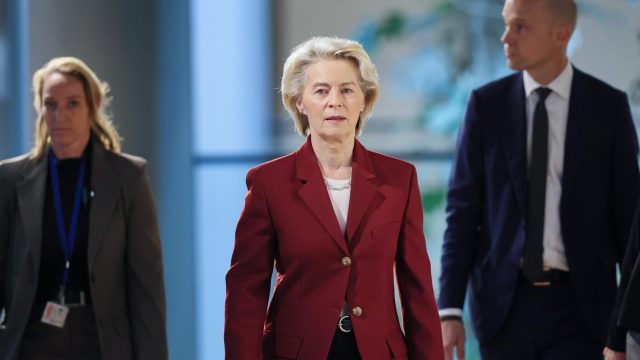
Caption: Danish Prime Minister Mette Frederiksen talks to the press after her opening speech at the People’s Assembly in Allinge, Bornholm, Denmark, 11 June 2026. The People’s Assembly in Denmark, officially called Folkemodet, is an annual gathering on the island of Bornholm that brings together citizens, politicians, NGOs, and business leaders to discuss current issues and celebrate democracy. EPA/SEBASTIAN ELIAS UTH
Updated: July 14, 2026 - 11:51