 Edit
EditCould Trump be the first U.S. president to visit Belgrade since 1980?
Scenarios of US-Serbia rapprochement through economy and energy cooperation explored amid a possible Trump visit
In a period marked by global volatility and shifting geopolitical alliances, Serbia is actively seeking to recalibrate its relationship with the United States, viewing the current U.S. administration under Donald Trump as an opportunity to re-engage on more favorable terms.
The recent credential ceremony of Serbia’s new ambassador to Washington, Dragan Šutanovac, at the White House has renewed speculation over a potential strengthening of U.S.-Serbia ties. The focus is expected to include economic cooperation, energy diversification, and a broader alignment of conservative values.
EUalive’s partner IBNA explores scenarios for US-Serbia rapprochement through economic and energy cooperation amid a possible Trump visit.
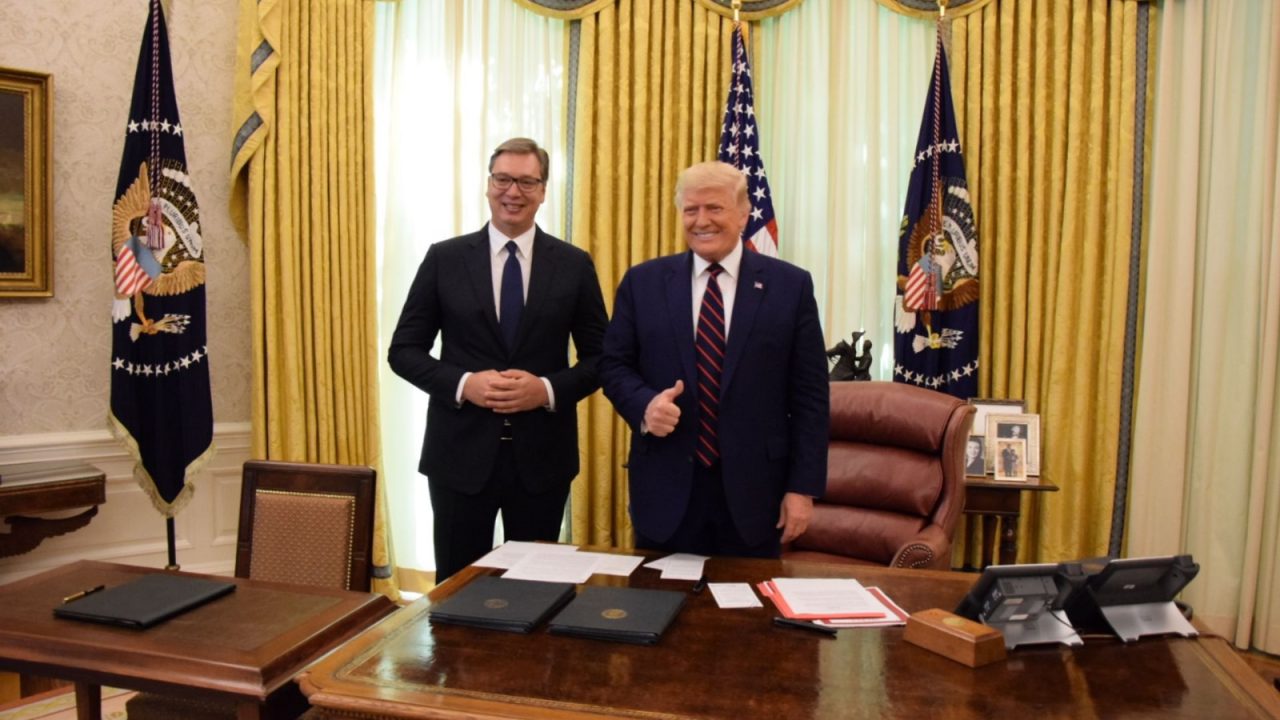
During the ceremony, Šutanovac pointedly reminded President Trump that no sitting U.S. president has visited Belgrade since Jimmy Carter in 1980. His call to “make our strategic partnership great again” reflects Serbia’s intent to reposition itself in the eyes of Washington -particularly under an administration prioritising mutual interest over ideological alignment. Serbian President Aleksandar Vučić has long spoken about the possibility of Donald Trump visiting Belgrade.
Ideological closeness
While economic and energy interests are at the forefront, analysts also note an ideological affinity between the Trump administration and the Serbian leadership. Both sides emphasize national sovereignty, traditional family values, and cultural identity. This rhetorical and political convergence is underscored by their shared admiration for Hungarian Prime Minister Viktor Orbán, whom both Trump and Serbian President Aleksandar Vučić have praised as a principled and visionary leader.
According to sources within diplomatic and economic circles, the current climate appears more conducive to a bilateral reset than in previous administrations. Washington’s pivot toward energy independence and a pragmatic approach to the Western Balkans leaves space for alternative frameworks of cooperation, centered on stability and growth.
A key figure in this evolving relationship remains Richard Grenell, former U.S. special envoy for the Belgrade-Pristina Dialogue under Trump. Grenell is seen in Belgrade as a trusted interlocutor and continues to maintain strong personal ties across the region. His potential return to diplomatic or advisory roles could act as a catalyst for renewed U.S.-Serbian engagement.
On the ground, Serbia’s efforts to diversify energy partnerships, including deals with Western and American firms, have been received positively in Washington. Despite unresolved issues, such as U.S. sanctions on the Serbian oil company NIS, negotiators believe there is room for a more flexible compliance mechanism aligned with Euro-Atlantic standards.
Family business
Meanwhile, private sector activity has added momentum to political overtures. Reports suggest Jared Kushner, President Trump’s son-in-law, is involved in proposed real estate investments in Belgrade, aiming to capitalise on strategic real estate locations. Though still at an early stage, these ventures are interpreted in Serbia as a sign of personal interest from the Trump inner circle.
Controversy halts Trump son-in-law’s $500M Belgrade real estate project
Trump’s political flair and preference for symbolic gestures could also pave the way for a historic visit to Belgrade, especially if linked to new strategic or economic agreements.
Despite ongoing challenges, including close ties with Russia and China – Serbia appears willing to explore selective adjustments that balance its East-West orientation. The Trump administration’s less rigid expectations of alignment provide diplomatic room for Belgrade to assert a neutral stance while pursuing mutually beneficial deals.
The new U.S. Embassy compound in Belgrade, while fully operational, has yet to host senior State Department officials. This leaves open the possibility of an upgrade in political visibility – either through a presidential visit or a high-level delegation, potentially laying the groundwork for revitalised diplomacy.
A Trump visit would be an occasion for Belgrade to renegotiate the tariff Trump imposed on the country. In April 2025, President Donald Trump imposed a 37% tariff on Serbian exports to the U.S., which was later adjusted to 35% starting August 1, 2025, targeting goods like tires, arms, machine parts, animal feed, fruits, and copper due to Serbia’s high trade barriers (up to 74%) on American products.
While Serbia’s exports to the U.S. constitute only about 2% of its total exports ($670.1 million in 2024), the tariffs significantly impact key industries like automotive and defense, potentially reducing competitiveness and causing indirect economic damage through fewer orders and job losses. However, the limited trade volume with the U.S. means the direct economic hit is not catastrophic, though it could strain Serbia’s economy if global trade disruptions persist.
Edited by k.n and g.g.
Caption: Donald Trump and Aleksandar Vučić/Vučić’s X account.
Updated: July 30, 2025 - 05:14