Edit
Civil society groups urge EU leaders to protect AgoraEU funding as budget talks harden
The signatories argue that the costs of underfunding culture, media and civil society would far outweigh the modest budgetary savings on offer
As EU leaders gather in Brussels for the European Council on 15–16 October, more than 600 organisations have issued an open letter calling on them to preserve a robust budget for AgoraEU, the proposed EU programme for culture, media and democratic values in the 2028–2034 Multiannual Financial Framework (MFF).
The signatories, led by the Future of Europe Cohort together with the European Federation of Journalists, Civil Society Europe and Culture Action Europe, urge Member States to maintain at least the European Commission’s proposed envelope of €8.58 billion in current prices and to move towards the higher allocation sought by the European Parliament.
AgoraEU is designed to consolidate and expand existing support under a single framework. It would bring together the cultural strand of Creative Europe, a strengthened MEDIA+ strand covering the audiovisual sector and independent journalism, and a CERV+ strand focused on citizens, equality, rights, values and democratic participation. The Commission presented it as a means to simplify access to funding, reinforce cultural cooperation and media freedom, and strengthen democratic resilience at a time of rising geopolitical tensions, disinformation and declining trust in institutions. According to the letter, the programme would underpin cross-border cultural exchange, support independent news media (particularly in areas already affected by news deserts), and back civil society organisations that help citizens access reliable information and defend their rights.
The Irish Presidency’s negotiating box for the MFF, however, has proposed cutting AgoraEU to approximately €6 billion – a reduction of around 30 per cent relative to the Commission’s figure and the largest single cut among major programmes. The overall MFF would be reduced by about 8 per cent, yet the letter argues that the AgoraEU reduction yields only negligible savings of roughly 0.2 per cent of the total budget while imposing disproportionate and potentially irreversible damage on cultural cooperation, independent journalism and civic infrastructure. Cultural and media organisations have described the Commission’s original allocation as a minimum baseline; further reductions, they contend, would weaken precisely the tools the EU needs to counter hybrid threats, sustain local information ecosystems and maintain social cohesion.
Whether such cuts would serve the European Union’s broader interests is open to serious question. Independent media and reliable information are repeatedly cited in EU strategic documents as essential to democratic resilience and the fight against disinformation – challenges that two-thirds of Europeans report encountering regularly. Reducing support for journalism and civic participation at a moment when news deserts are spreading, hybrid campaigns are intensifying, and public trust is under pressure risks undercutting the very capacities the Union seeks to strengthen. The letter frames AgoraEU as critical infrastructure for Europe’s collective future: it supports cultural employment (Eurostat data put cultural employment, including journalism and broadcasting, at 8.9 million people in 2025, or 4.3 per cent of total EU employment), fosters cross-border cooperation, and helps deliver the rights and equal opportunities promised in the Treaties. In that light, a sharp cut that saves little in the overall budget while eroding information integrity and civic space appears difficult to reconcile with stated priorities on competitiveness, security and democratic values.
The final shape of AgoraEU will be settled in the ongoing MFF negotiations. For now, the open letter places the programme squarely on the table as leaders discuss the next long-term budget, energy prices, support for Ukraine and hybrid threats.
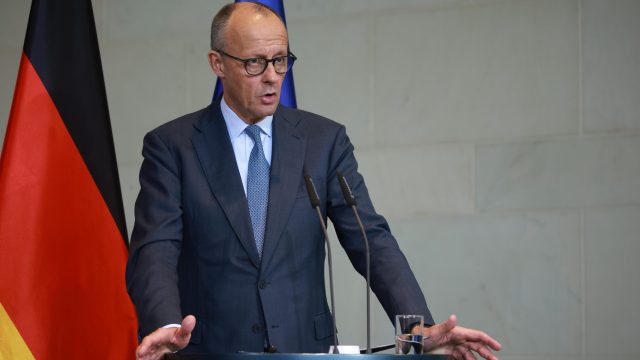
Caption: EU leaders met on 15 October 2026 with a heavy agenda, which includes the next EU budget for 2028–2034 [Council Newsroom]
Updated: October 15, 2026 - 13:26