 Edit
Bulgaria opposes EU sanctions targeting the Russian Patriarch and Lukoil
The government in Sofia considers sanctions against Patriarch Kirill to be largely symbolic and potentially counterproductive
Bulgaria has objected to parts of the EU’s proposed 21st package of sanctions against Russia, specifically measures targeting Russian Orthodox Patriarch Kirill and provisions that could affect the operations of Russian oil giant Lukoil, Bulgarian Foreign Minister Velislava Petrova said on Wednesday.
The 21st sanctions package was proposed by the European Commission on 9 June and is expected to be adopted by the end of July. Expected elements include locking in the G7 oil price cap mechanism (around $44-60 per barrel), blacklisting more shadow fleet tankers, expanding designations of war-supporting entities and individuals (potentially including Russian Orthodox Patriarch Kirill), and new curbs on crypto, trade, and financial channels.
21st sanctions push: EU tightens the screws on Putin’s war economy – but will It be enough?
Sofia has long maintained a cautious position on issues involving the Russian Orthodox Church and its head, Patriarch Kirill.
During previous discussions on possible EU sanctions against the Russian religious leader, Bulgaria was among the member states expressing reservations, arguing that religious freedom should be protected and that sanctions should not be imposed on spiritual leaders.
Despite its concern for religion, the new Bulgarian government has refrained from issuing an official position following a Russian attack that damaged parts of the Kyiv Pechersk Lavra, the vast medieval monastery complex in central Kyiv that is protected by UNESCO and regarded as one of the most important symbols of Orthodox Christianity.
The issue of sanctioning Patriarch Kirill is not new within the European Union. In 2022, his name was considered as part of the bloc’s sanctions response to Moscow because of his support for Russia’s invasion of Ukraine. However, the proposal failed to secure the unanimous backing required among member states.
“The purpose of sanctions is to create economic consequences that make the continuation of the war an unattractive option and encourage a return to the negotiating table,” Petrova said.
“When sanctions are primarily symbolic rather than economic in nature, Bulgaria opposes such measures.”
According to the minister, discussions on the sanctions package are still ongoing and a number of member states have expressed concerns.
Bulgaria considers sanctions against Patriarch Kirill to be largely symbolic and potentially counterproductive, as they could provide fertile ground for anti-European narratives alleging that the EU is interfering in church affairs.
“We support sanctions that have a tangible economic effect but do not inflict greater damage on EU member states than on the country waging the war,” Bulgaria’s top diplomat added.
Petrova also said Bulgaria does not support tougher sanctions on Russian oil companies if they risk affecting the operations of Lukoil. “These measures concern the energy sector, and our objective is to safeguard the country’s energy stability. There are a number of sanctions proposals – I will not go into specifics, that could have consequences in this area,” she said.
Asked whether the package contains measures that could directly affect Lukoil, the foreign minister confirmed that it does. “Yes, there are a number of proposed measures that would affect Lukoil subsidiaries. This is a position Bulgaria has consistently maintained. Our primary priority is preserving the country’s energy stability, given our specific circumstances,” Petrova said.
“This is not an exception. All member states have reservations about measures that could affect their energy security.”
Lukoil’s refinery in the Bulgarian Black Sea city of Burgas is the largest oil-processing facility in the Balkans and the only refinery operating in Bulgaria. A shutdown of the plant would trigger a fuel supply crisis in the country and could lead to significant shortages of aviation fuel across the region.
Even before Bulgaria’s parliamentary elections, expectations were growing that former President Rumen Radev would adopt a more pronounced Eurosceptic stance, reflecting views shared by a substantial part of his electorate. At the same time, few expected him to challenge the EU consensus on Russia directly.
As Prime Minister Radev has opposed the provision of military aid to Ukraine. Last week, his government announced it would halt further transfers of weapons from Bulgarian army stockpiles to Kyiv.
Bulgaria has never been a top-tier direct donor to Ukraine. Much of the real impact came indirectly. In the early phases of the war, Bulgaria exported large volumes of ammunition and weapons to European intermediaries or third countries, which then routed them to Ukraine. Analysts expect commercial exports and third-party-funded flows to continue or even grow.
Bulgaria’s “end” to Ukraine aid: rhetoric vs. reality in Sofia’s balancing act
Arms exports account for nearly 2% of Bulgaria’s GDP, making the sector an important contributor to the national economy.
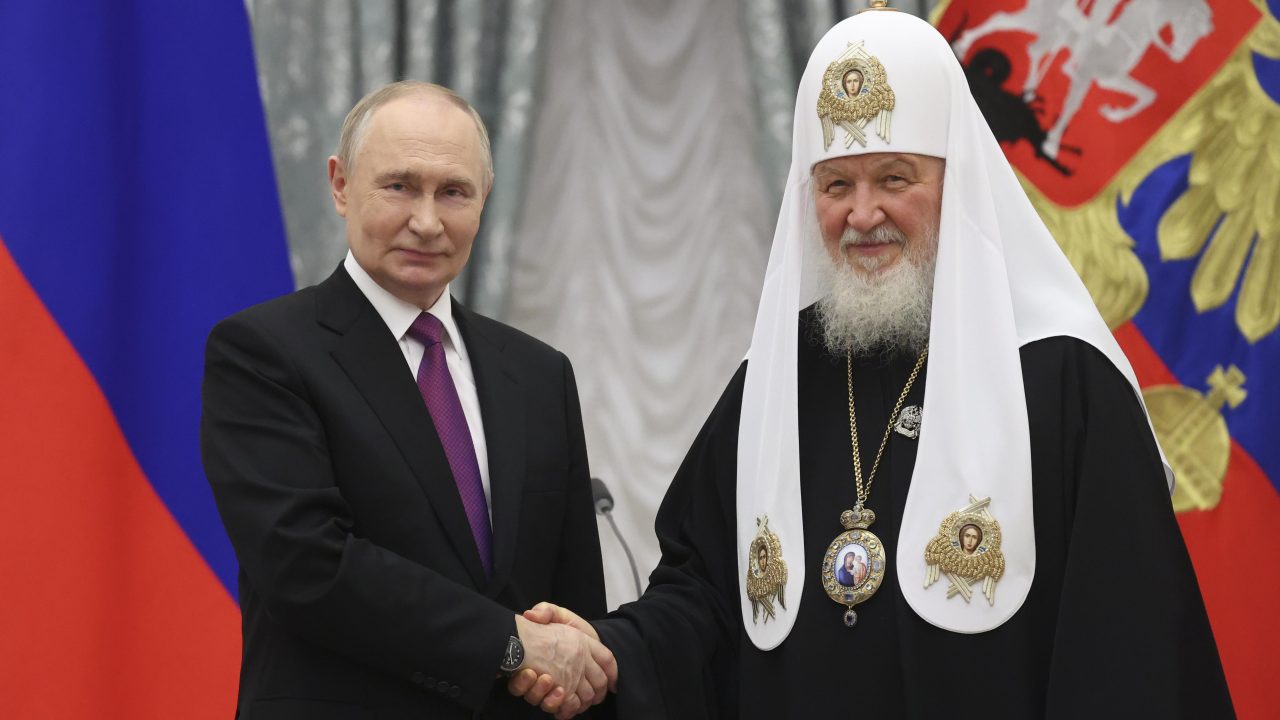
Caption: Russian President Vladimir Putin (L) awards Patriarch Kirill of Moscow and All Russia with the Presidential Prize for Contributions to Strengthening Russia’s National Unity during an award ceremony marking the National Unity Day at the Kremlin in Moscow, Russia, 4 November 2025. The National Unity Day (or Day of People’s Unity) is annually celebrated in Russia on 4 November. The Unity Day a national holiday which this year marks the expulsion of Polish occupiers from the Kremlin in 1612. EPA/MAXIM SHIPENKOV
Updated: June 17, 2026 - 15:36