 Edit
Bulgaria, Greece and Romania sign €22.8bn action plan to connect Aegean, Danube and Black Sea
Officials present the initiative as civilian infrastructure that also supports military mobility on NATO’s eastern flank
Transport ministers from Bulgaria, Greece and Romania signed a joint action plan on 29 September 2026 for 25 priority cross-border projects worth about €22.8 billion, aiming to create a continuous north–south and east–west transport network linking the Aegean Sea, the Danube and the Black Sea.
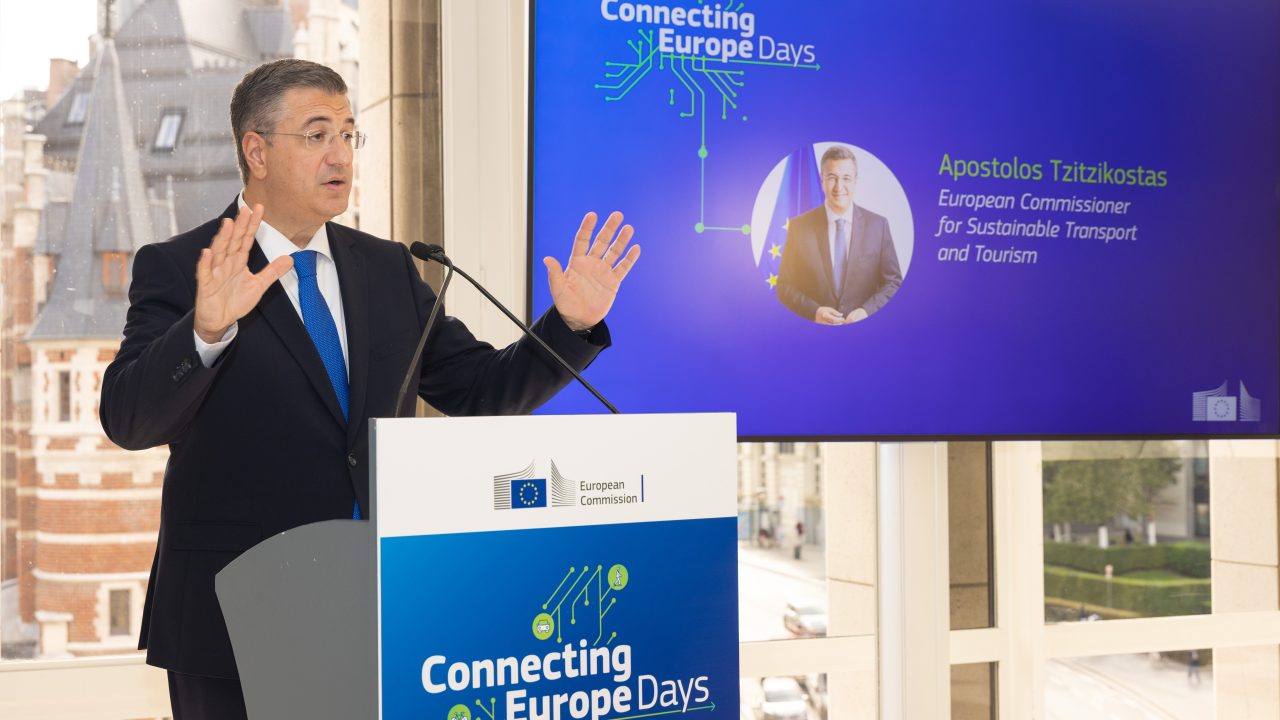
The ceremony took place during Connecting Europe Days at a high-level meeting titled “Friends of South-East Europe: Let’s overcome the gaps together.”
Bulgarian Transport Minister Georgi Peev, Greek Infrastructure and Transport Minister Christos Dimas and Romanian State Secretary for Transport Ionel Scrioșteanu signed the document together with European Commissioner for Sustainable Transport and Tourism Apostolos Tzitzikostas, European Coordinators Mario Mauro (Baltic Sea–Black Sea–Aegean) and Margarida Marques (Rhine–Danube), and European Investment Bank Vice-President Robert de Groot.
The plan implements a memorandum of understanding signed on 3 December 2025 that established the Black Sea–Aegean Corridor Platform (BACP). Of 53 identified projects, 25 were selected for their strategic importance and readiness. Partial financing is already in place; the three governments are pushing for stronger EU support in the 2028–2034 Multiannual Financial Framework.
Key projects and timelines
The fastest-track items include modernisation and electrification of the existing Ruse–Giurgiu–Bucharest railway, targeted for 2030, and a new combined road-rail Danube bridge at Ruse–Giurgiu, targeted for 2032. Feasibility work on the second bridge is under way, with Egis Romania awarded the study contract in mid-2026 under Connecting Europe Facility military-mobility funding.
Other listed priorities include modernisation of the busy Burgas–Varna–Ruse rail line and design of two additional Danube bridges at Silistra–Călărași and Nikopol–Turnu Măgurele, planned for financing through 2034. On the Greek side, Dimas highlighted upgrades of the Alexandroupoli–Pythio–Ormenio railway (contract expected in early 2027) and the Mouries–Promachonas–Kulata section (contract expected June 2027), plus the Thessaloniki port rail connection.
The corridor is organised along three axes:
– Western: Athens–Thessaloniki–Promachonas–Kulata–Sofia–Vidin/Calafat–Craiova–Bucharest
– Central: Thessaloniki/Alexandroupoli–Ormenio–Svilengrad–Ruse–Giurgiu–Bucharest, with extensions toward Ukraine and Moldova
– Eastern: Alexandroupoli–Burgas/Varna–Constanța
Strategic context
Peev told reporters the three countries now recognise they must work together on connectivity and have full backing from the Commission, Parliament and European financial institutions. He identified lack of coordination and regional mistrust as the main obstacles, called for more Danube bridges, and said Sofia–Plovdiv rail capacity should be doubled. “Transport and security need to be more closely linked,” he said
Officials present the initiative as civilian infrastructure that also supports military mobility on NATO’s eastern flank and offers an alternative to congested Bosphorus routes. Dual-use standards for certain ferries and bridges are part of the earlier memorandum. Completion of the core TEN-T network remains targeted for 2030, with the wider network stretching into the 2040s.
The next practical test will be joint applications under the current Connecting Europe Facility call (open until 6 October 2026) and the scale of funding secured for the 2028–2034 period. Implementation will depend on coordinated national planning, environmental approvals and construction timelines that have historically slipped in the region.
Caption: European Commissioner for Sustainable Transport and Tourism Apostolos Tzitzikostas speaks during the Connecting Europe Days at a high-level meeting titled “Friends of South-East Europe: Let’s overcome the gaps together.” [Europe by Satellite]
Updated: September 30, 2026 - 05:39



