 Edit
Bulgaria backs down on Russia sanctions veto threat
Instead of veto, Radev's cabinet now speaks of "reservations" to the inclusion of Patriarch Kirill and Lukoil founder Vagit Alekperov in the package
After weeks of signalling it could block the EU’s next sanctions package against Russia, Bulgaria has stepped back from a threatened veto, opting instead to seek amendments to the blacklist while allowing the bloc’s 21st sanctions package to move forward.
”Bulgaria will not veto the European Union’s 21st package of sanctions against Russia, despite maintaining objections to the inclusion of several individuals and entities on the proposed blacklist, Defence Minister Dimitar Stoyanov said on Thursday.
Responding to questions over whether Sofia’s objections amounted to a veto threat, Stoyanov was unequivocal.
“No. This is not a veto. These are reservations that we are proposing so that these individuals can be removed from the sanctions regime,” he said in an inteview for bTV.
The clarification marks a significant shift from earlier statements by Prime Minister Rumen Radev, who had repeatedly indicated that Bulgaria could block the package if certain names remained on the sanctions list.
Only weeks ago, Radev stated publicly that Bulgaria opposed sanctions against both Patriarch Kirill and Lukoil founder Vagit Alekperov. On 19 June, during a visit to Brussels, he repeatedly answered “yes” when asked whether Bulgaria would veto the package.
The prime minister has on several occasions pledged to take a firm stance on sanctions in defence of what he describes as Bulgaria’s national interest.
From veto threats to “reservations”
Radev has argued that the Russian Orthodox Church played an important role in Bulgaria’s liberation from Ottoman rule and said his concern was not focused on Patriarch Kirill personally but on “millions of Russian believers”.
Regarding Alekperov, the Bulgarian premier linked Sofia’s position to a €3 billion arbitration claim brought against Bulgaria by the Russian oil company.
EU member states are expected to approve the 21st sanctions package on 14 July. It remains unclear, however, how Sofia would respond if its objections are ultimately ignored by other member states.
The Bulgarian position was discussed during a government meeting on Thursday.
During his presidency between 2017 and 2026, Radev was consistently sceptical of EU sanctions against Russia. However, he never blocked any sanctions package, despite having the opportunity to do so between 2022 and 2023, when Bulgaria was governed by a series of caretaker administrations appointed by him.
Many Bulgarian political analysts view Radev’s Eurosceptic rhetoric on Russia sanctions primarily as a domestic political message aimed at appealing to his pro-Russian electorate rather than a genuine attempt to derail EU policy.
Other concerns
The Bulgarian government has also raised objections to parts of the sanctions package that could affect the supply of spare parts for the Sofia metro system, according to the government press office, although officials have not provided further details.
According to information cited by Bulgarian news agency Focus, one of the disputed names is railway transport businessman Iskandar Makhmudov. Sofia reportedly fears that maintaining sanctions against him could complicate the delivery of spare parts and maintenance services for metro trains.
The government is also said to oppose the inclusion of Russian Sports Minister Mikhail Degtyaryov, arguing that sport should not be targeted by EU sanctions.
Another Bulgarian concern relates to JSC Togliattikhimbank, a financial institution involved in financing Russian fertiliser exports. Sofia fears sanctions against the bank could negatively affect fertiliser availability and prices.
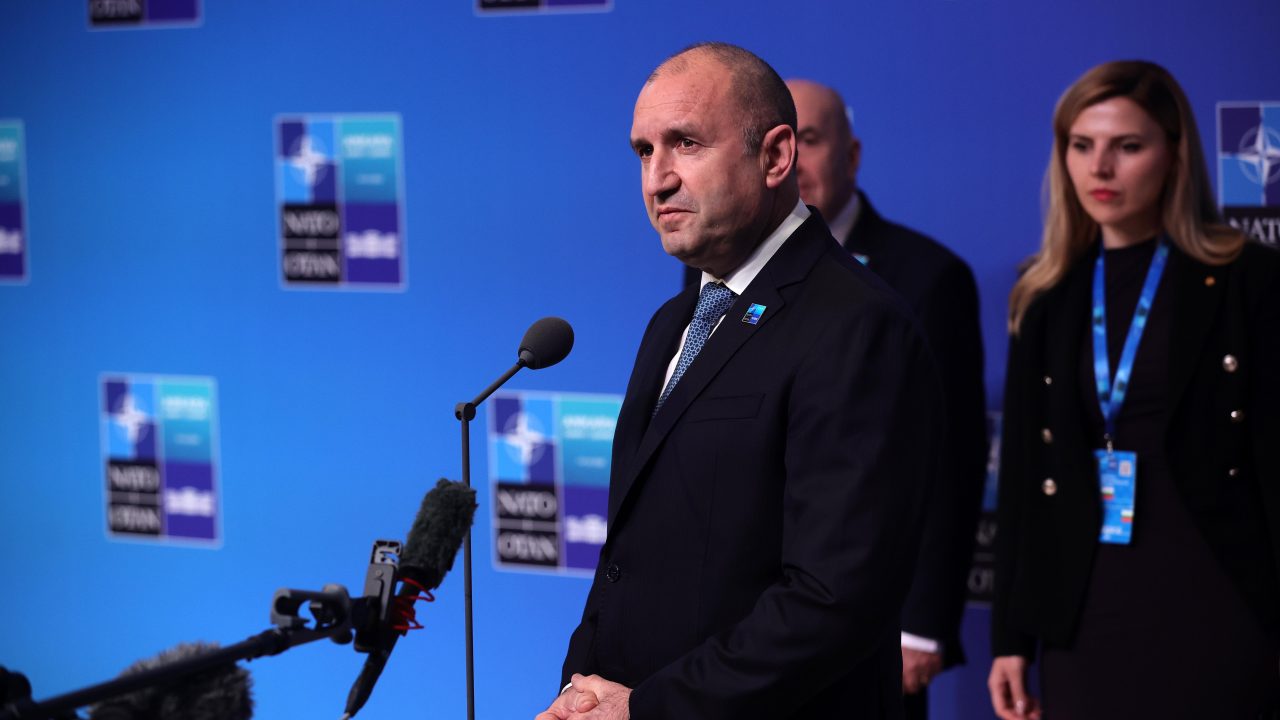
Caption: Bulgarian Prime Minister Rumen Radev speaks to the media upon arrival at the 2026 NATO summit in Ankara, Turkey, 8 July 2026. The NATO Summit takes place from 7-8 July. EPA/NECATI SAVAS
Updated: July 21, 2026 - 10:47