Edit
Borissov triggers government resignation as mass protests shake Bulgaria
The opposition refrained from triumphalism, instead issuing a sobering reminder of the formidable challenges that lie ahead.
The leader of Bulgaria’s senior coalition party GERB, Boyko Borissov, triggered the resignation of the government on Thursday, following unprecedented protests against corruption, oligarchic influence and the lack of rule of law.
Borissov said he had pushed for the resignation to prevent his party from being “wiped out”, adding that he did not see a single mistake made by GERB’s administration, noting that Bulgaria entered Schengen this year and will join the eurozone on 1 January thanks to the GERB-led cabinet.
“This is a victory for all Bulgarian citizens. From here on comes the more difficult task – for Bulgaria to become a state that works for all its citizens, not just for one of them. Civic energy managed to stop this plan,” said Assen Vassilev, one of the leaders of the liberal coalition We Continue the Change – Democratic Bulgaria, which initiated the massive protests.
Ivaylo Mirchev, another coalition leader, warned of a serious risk of large-scale vote-buying in the upcoming elections that could distort the democratic vote.
“If anyone thinks that the people with nicknames will once again buy votes – we will not allow them. We will flood the country with observers: Bulgarian citizens monitoring the integrity of the elections. It will not be like the previous elections, this must be clear,” Mirchev said.
Nearly one million Bulgarians protest oligarchy as Borissov hints at January resignation
Fear of being wiped out
“We did everything to be brilliant,” said Borissov, who chose to address only his party leadership while ignoring the media. His statement was broadcast live via GERB’s Facebook channel, and his words revealed a clear fear of being eliminated from the country’s political life.
“GERB brought the country into Schengen and the eurozone. And to prevent us from being wiped out, I insisted on this resignation today. Because when you have a problem with your children or the young people around you, the easiest thing is to hit them and say they understand nothing – then you remain misunderstood. But when you sit down and carefully explain, they understand you,” Borissov said, referring to the large number of young people who protested against the government.
The GERB leader, who has served ten years as prime minister, was governing in a broad four-party coalition that collapsed because of the participation of Delyan Peevski – sanctioned by the United States and the United Kingdom as a corrupt oligarch – and leader of the party DPS – New Beginning.
Peevski, who has been sanctioned by both Washington and London for corruption, emerged as the dominant figure behind the government. The opposition accuses him of being an oligarch secretly capturing the intelligence services, judiciary and independent regulators to gain informal absolute power.
Borissov himself has repeatedly hinted at concerns about Peevski’s influence and seized upon the protests as an opportunity to topple a government that had become heavily dependent on the sanctioned Bulgarian politician.
A few hours before the resignation, a “Market Links” poll showed record-low support for GERB at 17%, almost 10 percentage points below the party’s election performance a year earlier.
Borissov announced that his party would not participate in new attempts to form a government within the current parliament. “There will be no reformatting. No one will climb on my back again,” he said.
He promised that GERB would no longer deal with the draft budget for next year, although the party would “do its utmost to help prevent price increases”.
“But people need to know – a government in resignation no longer works. Whatever it tries to do, the administration already knows: ‘They are leaving’,” Borissov said.
He added that responsibility should now lie with the leaders of the liberal pro-European coalition We Continue the Change – Democratic Bulgaria, who initiated the mass protests.
The alternative
The government’s resignation places responsibility in the hands of the opposition coalition We Continue the Change – Democratic Bulgaria (PP-DB), but polling suggests the liberal bloc lacks the support needed to govern alone.
The resignation prolongs Bulgaria’s political crisis, which began in 2021 with the end of Borissov’s previous government. A new political force is expected to emerge, led or backed by President Rumen Radev, seeking to capitalise on the civic energy generated by PP-DB.
Public expectations remain focused on much-needed anti-corruption reforms and changes within the judiciary.
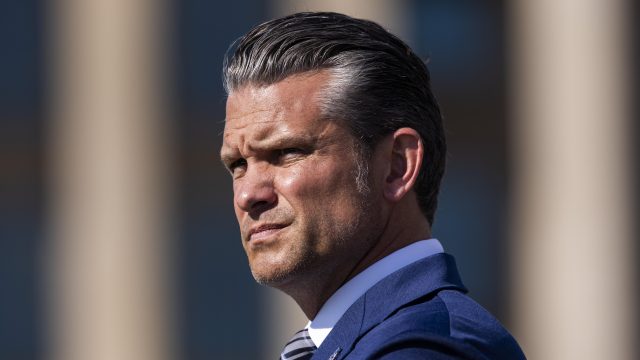
Caption: Boyko Borissov announced that his party GERB is now in opposition [Dnevnik]
Updated: December 11, 2025 - 17:57