Edit
Behind closed doors: how Bulgaria is selecting its next European Prosecutor
The shortlist was known in advance, deliberations were opaque, and key questions about influence networks went unasked
The position of Bulgaria’s European Public Prosecutor is far more than a well-paid posting in Luxembourg. In a country where large-scale fraud involving EU funds has long intersected with political influence, an independent and active European Prosecutor could disrupt entrenched networks, expose major financial schemes and give European Delegated Prosecutors on the ground the chance to work without political pressure.
That is precisely why the selection of Bulgaria’s next European Prosecutor matters. Yet the process has unfolded in a period of deep political instability and largely outside the public overvew. On 15 January three candidates were shortlisted from an initial pool of six, but the way the selection was conducted has already raised serious questions.
The three shortlisted candidates – Dimitar Belichev, Mihaela Raydovska and Plamen Petkov – were widely discussed as favourites days before their public hearings. This has fuelled suspicions that the outcome may have been decided in advance, regardless of the formal interview process. Although the hearings were technically public, the subsequent deliberations took place behind closed doors, and no detailed justification was provided beyond a general statement that these three candidates had performed most convincingly.
This lack of transparency is particularly sensitive in Bulgaria, where influential informal networks in the judiciary linked to brokers such as Petyo Petrov, known as “The Euro”, and Martin Bozhanov, nicknamed “The Notary”, have never been fully dismantled. Despite this context, none of the candidates was asked whether they had links to such circles, even as a formality. Observers also noted that the interviews themselves were undemanding, with candidates rarely placed under pressure or confronted with uncomfortable questions. At one point, applicants were asked to translate several sentences in English, despite the absence of a professional interpreter on the panel.
The three shortlisted names were submitted to Bulgaria’s Council of Ministers that will forward them to the relevant EU bodies for further selection. European Prosecutors are appointed by the Council of the EU for a six-year term. The new mandate is expected to begin in late July, while the term of European Chief Prosecutor Laura Codruța Kövesi expires in October.
Dimitar Belichev is a graduate of the law faculty of Plovdiv University and currently heads the office of European Delegated Prosecutors in Bulgaria. He is considered to have been close to Bulgaria’s current European Prosecutor, Teodora Georgieva, and is widely expected to succeed her in Luxembourg, a move that would likely preserve institutional continuity unless internal dynamics have shifted. Belichev is known to be working on some of the most sensitive EU-related cases in Bulgaria, a factor that could strengthen his profile at EU-level hearings.
Bulgaria’s European prosecutor to be removed in unprecedented case
Belichev’s spouse, Evgenia Stefanova, is also a prosecutor. She was initially seconded from the Haskovo District Prosecutor’s Office to the Sofia Regional Prosecutor’s Office in November 2023, later secured a permanent post at the Sofia District Prosecutor’s Office, and was subsequently seconded again to the Sofia Regional Prosecutor’s Office. Her name does not appear in the most recent list of seconded prosecutors.
Mihaela Raydovska is currently serving as a European Delegated Prosecutor and is the supervising prosecutor in a high-profile case against a former mayor of Varna. If Belichev is ultimately selected as European Prosecutor, Raydovska is widely expected to assume leadership of the Bulgarian office of the European Public Prosecutor’s Office (EPPO), although there is speculation that her ambitions extend beyond a national role.
During her hearing, Raydovska complained of excessive workload, a lack of analytical support staff and insufficient English-language capacity within the administration. A graduate of the South-West University in Blagoevgrad, her career trajectory has been rapid: from a short tenure as a prosecutor in Blagoevgrad, she moved to Sofia, first at district level, then on secondment to the Sofia City Prosecutor’s Office, where she later became deputy city prosecutor between 2017 and 2020, during the tenure of Emilia Rusinova, who has since returned to the same post.
Raydovska is married to Atanas Raydovski, a member of Bulgaria’s State Commission on Information Security, appointed by the Council of Ministers in June 2024. His career began at the National Security Service and later continued at the State Agency for National Security (SANS).
The third shortlisted candidate, Plamen Petkov, is a deputy head of the Sofia District Prosecutor’s Office and a graduate of the South-West University in Blagoevgrad. He previously ran unsuccessfully for the position of European Delegated Prosecutor in 2021 and later, in 2022, for membership in Bulgaria’s Supreme Judicial Council (SJC) from the professional quota.
More than a year ago, Petkov was questioned by the Prosecutors’ College of the Supreme Judicial Council as part of an inquiry into links between magistrates and the late Martin Bozhanov, known as “The Notary”. During that hearing, Petkov confirmed that Bozhanov and lawyer Velimir Atanasov had attended a Christmas party organised by the Sofia District Prosecutor’s Office in 2021.
Petkov’s spouse is the sole owner of the company “Balance Nutrition” Ltd, from which he uses a company car free of charge.
The controversy surrounding the selection is amplified by Bulgaria’s recent experience with its current European Prosecutor, Teodora Georgieva. European Prosecutors are members of the EPPO College and supervise cases conducted at national level, while European Delegated Prosecutors operate domestically under national law. Georgieva remains a unique case in the short history of the EPPO, as no other national representative has been suspended while disciplinary proceedings are ongoing.
Questions surrounding Georgieva have never been conclusively answered, including allegations linking her to the informal influence network of “The Euro”. In court testimony last year, a key witness claimed that Georgieva and former Chief Prosecutor Ivan Geshev were frequent visitors to a restaurant alleged to have served as the headquarters of Petyo Petrov’s network. According to that testimony, Petrov had boasted about securing Georgieva’s appointment as European Prosecutor.
Against this backdrop, the composition of the selection committee has also drawn scrutiny. The panel included representatives from both chambers of the Supreme Judicial Council, the Ministry of Justice and academia. However, the mandate of the SJC expired in October 2022, raising questions about the legitimacy of its members’ continued participation in such a critical procedure.
Several members of the committee have previously worked closely with some of the candidates, including in the same prosecutorial departments during overlapping periods.
One of the more revealing moments in the hearings came from former candidate Desislava Pironeva. She recalled that in 2019 she had again applied for the same post and had been ranked first by the selection panel, only for the position to be awarded to the third-ranked candidate, Teodora Georgieva. Pironeva now described that decision as entirely political, explaining that she had withdrawn at the request of then chief prosecutor Ivan Geshev in order to become his deputy.
Speaking to the media, she said she had been surprised at the time that neither the first- nor the second-ranked candidate was appointed, and expressed hope that Bulgaria had moved beyond an era in which such decisions were taken informally, “on sofas and at [restaurant] tables” – a phrase that has become shorthand in Bulgaria for opaque power-brokering. Her remarks, however, also raised an unresolved question: if she was aware of political interference in the process in 2019, why did she chose to remain silent then – and why isn’t she speaking more openly now?
Is Bulgaria is now risking another reputational crisis linked to the European Public Prosecutor’s Office? The jury is out.
The original article in Bulgarian can be found here.
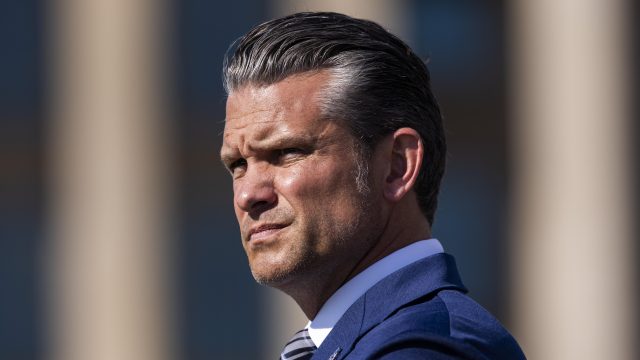
Caption: File photo, EPPO
Updated: January 27, 2026 - 06:05