 Edit
Are Ukrainian refugees still welcome in Europe?
As EU countries tighten asylum rules and cut benefits, growing public fatigue and political pressure are reshaping attitudes toward Ukrainian refugees
It appears that the warm welcome extended to Ukrainian refugees in the early stages of the war has faded, writes Yuri Mirovich.
Yuri Mirovich is a Ukrainian refugee living in the Netherlands since 2023 and currently studying law at the University of Groningen. While living in Ukraine he was engaged in active public work and now he is a member of the Dutch political initiative De Beweging.
Ukrainian refugees are no longer as welcome in Europe as they once were. EU countries are tightening conditions for refugees almost daily, and Ukrainians are increasingly affected. According to Eurostat, approximately 4.33 million Ukrainians currently hold temporary protection status in the EU (as of 31 March 2026). Most live in Germany, Poland, and Czechia. While stricter rules are making daily life more difficult, the majority of Ukrainians remain reluctant to return home – even to the safest regions of Ukraine. Many who have chosen to stay understand that rebuilding the country will take years, and not everyone is prepared to dedicate their lives to that effort. For them, particularly the younger generation, Europe represents a chance for a better future.
Recently, German Chancellor Friedrich Merz stated that Germany would limit asylum opportunities for Ukrainian men to encourage their return, arguing that “it is extremely important that these men are on the ground helping their country.” The German government had already cut benefits for newly arriving Ukrainian refugees in November 2025. Analysts suggest these measures were partly driven by the need to counter the rising popularity of the far-right Alternative for Germany (AfD) party, which strongly opposes both aid to Ukraine and support for Ukrainian refugees.
Meanwhile, some countries are going further by offering financial incentives for voluntary repatriation. The Irish government, for example, is developing a plan to provide payments to Ukrainians willing to return home – a move that has sparked criticism from parts of the Irish public, who argue that refugees already receive substantial support.
Housing conditions for many refugees remain problematic. In the Netherlands, over 7,000 refugee children are reportedly living in inappropriate temporary accommodation, such as overcrowded gyms or floating facilities, lacking privacy, stable welfare support, and proper conditions for education and rest – conditions that severely affect their health and psychological development.
Public attitudes toward refugees have also hardened. Many Europeans express growing irritation over perceived disrespectful behaviour by some migrants – both from the Middle East and Ukraine – and worry about the impact of new refugee centres on local communities. Protests against planned asylum facilities have become common, and in some cases, they have escalated into vandalism. In the Dutch town of Loosdrecht, the municipal building was damaged by arson after plans to open a refugee centre were announced. In Hardenberg, a new local coalition agreement explicitly calls for the swift closure of the existing asylum centre and states that the municipality will no longer accept refugees.
Such hostility is often unfair. Many Ukrainian refugees are successfully integrating and contributing to their host societies. Migrants frequently take on essential but less desirable jobs in construction, cleaning, logistics, and other sectors that many locals avoid. In the Netherlands, for instance, people with residence permits are finding paid employment faster than before, although these jobs are often unstable and do not always match their qualifications or education level.
Overall, it appears that the warm welcome extended to Ukrainian refugees in the early stages of the war has faded. European publics are increasingly critical of migration policies and are demanding stricter rules. EU governments, in turn, are beginning to respond to these pressures. The key question now is whether Ukrainian refugees will still have a realistic chance of building a peaceful and stable future in the European Union.
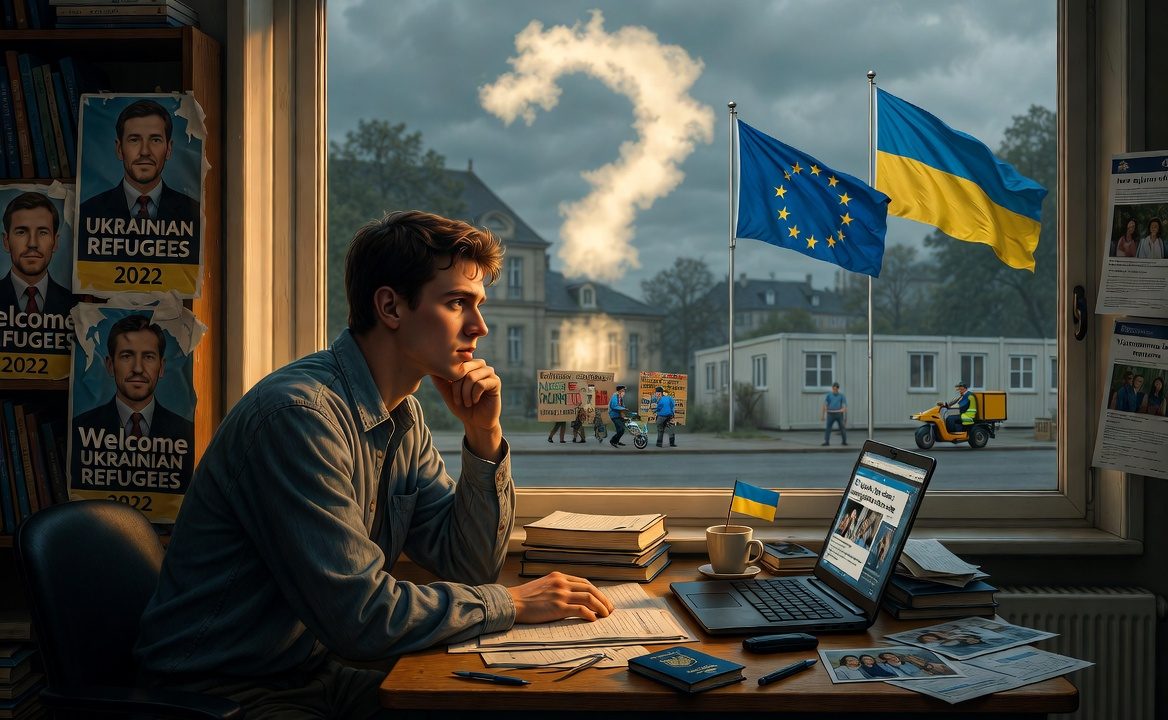
Caption: AI-generated illustrative image
Updated: May 27, 2026 - 17:26