Edit
Analysis: Yeni Parti – the battle for the soul of the CHP
Yeni Parti has quickly emerged as a significant parliamentary force, but its real contest with the main opposition CHP will be fought beyond Parliament
For the first time in decades, Turkey’s main opposition is challenging not only President Recep Tayyip Erdoğan, but also the historic political movement that has defined it for more than a century.
The creation of Yeni Parti by Özgür Özel and 90 other lawmakers has sparked a battle for control of the opposition, the political legacy of the Republican People’s Party (CHP) and, ultimately, the leadership of the challenge to the ruling AK Party.
With 91 seats, the new party has become the second-largest force in the Grand National Assembly, while the CHP has been reduced to 44 lawmakers. The shift is significant, but it is not yet complete. Those parliamentary seats were won on the CHP ticket and do not yet amount to an independent electoral mandate for the new party.
Yeni Parti emerged from the deepest internal crisis the CHP has faced since Özgür Özel became party leader in 2023. The court decision annulling the party congress that elected him, followed by the return of Kemal Kılıçdaroğlu, transformed an internal leadership dispute into a broader crisis of legitimacy and political representation.
Özel’s supporters portray the split as a response to interference in the opposition’s autonomy. His critics argue it was primarily an attempt by his leadership team to preserve its political influence after losing control of the party. In reality, neither explanation on its own fully captures the complexity of the crisis.
Özel is not starting from scratch. He commands a strong parliamentary group, well-known political figures, extensive municipal networks and established party organisations across Turkey. At the same time, Yeni Parti has also inherited many of the CHP’s internal rivalries, personal conflicts and entrenched organisational practices.
Yeni Parti’s programme suggests that the party is seeking to inherit the CHP’s political legacy rather than break away from it ideologically. It defines itself as a modern social democratic force while embracing the Six Arrows of Kemalism: republicanism, nationalism, populism, statism, secularism and reformism.
Özgür Özel is not abandoning the CHP tradition. Instead, he argues that his movement now represents it more authentically.
The struggle is therefore not between competing ideologies, but between two rival claims to the same political legacy. The CHP retains its name, symbols, historical identity and its connection to the founding of the Turkish Republic. Yeni Parti, meanwhile, has brought together most of the lawmakers who until recently represented that tradition, along with the leadership credited with the opposition’s success in the 2024 local elections.
Özel’s strategy will be to persuade voters that political continuity lies not in the party emblem but in public support, local government and the opposition’s ability to broaden its appeal. The CHP, in turn, will rely on something more powerful than parliamentary arithmetic: the deep emotional bond many of its supporters have with Atatürk’s party.
For a large part of secular Turkey, the CHP is more than an electoral vehicle. It is part of a political identity.
The battle for the party machine
The decisive contest will not be fought only in opinion polls. It will be decided in provincial organisations, municipal councils, party finances, trade union networks, local power structures, the lawyers overseeing elections and the media ecosystem surrounding the opposition.
This is where political power is truly built in Turkey. Members of parliament provide visibility and parliamentary influence. Mayors, party organisations and local networks win elections.
The positions taken by Ekrem İmamoğlu and Mansur Yavaş are therefore becoming increasingly significant. İmamoğlu embodies the opposition’s ability to win in Istanbul and appeal beyond its traditional Kemalist base. Yavaş enjoys stronger support among nationalist and conservative voters.
Without the clear backing of at least one of them, Özel may lead the largest parliamentary opposition group, but not necessarily the strongest presidential bid.
Yeni Parti is also trying to present itself as a more open and participatory political organisation. It proposes primary elections, a 50% gender quota and a 25% youth quota. In Turkish politics, however, such institutional safeguards are ultimately tested against powerful local organisations, personal ambitions and the leadership’s determination to control candidate selection.
The first major battle may not be against the AK Party, but over who ultimately controls Yeni Parti itself.
How the Presidency views the split
The Presidential Palace has little reason to see the split solely as a threat. For Recep Tayyip Erdoğan, two competing centres within the Kemalist camp are far easier to manage than a united opposition backed by a single political machine and a consensus presidential candidate.
The AK Party does not necessarily need to weaken Yeni Parti. It only needs to keep the rivalry between Yeni Parti and the CHP alive.
Every dispute over municipalities, party organisations, funding or leadership shifts attention away from the government’s vulnerabilities and towards the opposition’s internal power struggle. If the CHP retains a substantial share of the vote while Yeni Parti fails to win over the party’s traditional base, the split could ultimately work to Erdoğan’s advantage—even without increasing support for the AK Party itself.
The government’s narrative is already becoming clear. Özgür Özel is likely to be portrayed as a politician who abandoned his party to preserve his own political position, while Yeni Parti will be depicted as little more than the CHP under a different name—offering neither a new ideology nor a proven electoral appeal.
The Presidency is also expected to exploit the internal contradictions of Özel’s proposed “Alliance of Turkey.” Bringing together leftists, nationalists, conservatives, liberals and democrats under one political umbrella may be an electoral necessity. No opposition movement can realistically challenge Erdoğan while relying solely on the western provinces, the major cities and the secular middle classes.
The real challenge begins once such a coalition is required to govern. The Kurdish question, state–religion relations, migration, national security and economic policy all have the potential to turn electoral unity into internal conflict.
Opposition to Erdoğan can unite voters. Governing demands far more.
Institutions and the economy
The strongest pillar of Yeni Parti’s programme is its commitment to restoring a parliamentary system, strengthening the separation of powers, expanding local government autonomy and curbing the practice of replacing elected mayors with government-appointed trustees.
Yeni Parti proposes shifting power away from the presidency and towards Parliament, local authorities and independent oversight bodies. The proposal is aimed at a broad audience concerned about judicial independence, the concentration of executive power and mounting pressure on opposition-run municipalities.
Ultimately, however, the government will not be judged on institutional reforms alone. It will also be judged on the cost of living.
Yeni Parti advocates stronger labour protections, measures to reduce job insecurity, greater investment in public services and a review of major healthcare contracts. Its programme reflects a clearly social democratic agenda shaped by the pressures of inflation, widening inequality and the erosion of purchasing power.
The greatest challenge lies in closing the gap between promises and how they will be financed. Voters will expect credible answers on monetary stability, fiscal discipline, investment and the cost of expanding social policies. Identifying public discontent is relatively easy. Turning it into a credible programme for government is the opposition’s far more difficult task.
Foreign policy without a strategic shift
In foreign policy, Yeni Parti advocates closer ties with the European Union, a strong commitment to NATO, active engagement in multilateral institutions and continued investment in Turkey’s defence industry.
It does not challenge the core of Turkey’s strategic doctrine. Instead, it proposes a different way of implementing it.
A Yeni Parti government would most likely pursue a more predictable foreign policy, place greater emphasis on institutional decision-making and rely less on personalised leadership. Such an approach could facilitate relations with Brussels and Turkey’s neighbours without requiring any departure from Ankara’s long-standing positions in the Eastern Mediterranean, the Aegean or on national security.
In these areas, the continuity of the Turkish state remains stronger than changes in party politics.
The limits of the “new”
Yeni Parti already possesses many of the assets that newly established political movements typically lack: parliamentary strength, experienced politicians, nationally recognised figures and a foothold in local government.
What it still lacks is a distinct electoral constituency.
Its future will depend on the battle for party organisations, the stance of Turkey’s leading mayors, the credibility of its economic programme and its ability to keep together a coalition with often competing priorities.
Until then, Yeni Parti occupies a political space between two identities. It is more than a parliamentary split, but less than a fully fledged political realignment.
It has secured the position of the official opposition. It has yet to win over the opposition itself.
The article by Spiros Sideris, Chief Editor of EUalive’s partner IBNA, can be found here.
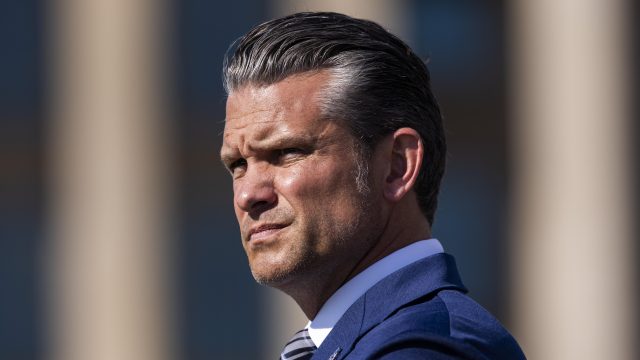
Caption: Ozgur Ozel, the ousted chairman of Turkey’s main opposition Republican People’s Party (CHP), addresses supporters at a rally held in front of the CHP Ankara Provincial Directorate building in Ankara, Turkey, 30 May 2026. Demonstrators gathered to protest a controversial court ruling that annulled the party’s 2023 congress, removing Ozel from office, and reinstating former chairman Kemal Kılıcdaroglu. EPA/STRINGER
Updated: July 27, 2026 - 13:31