Edit
EditAnalysis: How Montenegro’s Speaker is helping Serbia undermine its EU bid
While hardliners generate noise and maintain pressure, Andrija Mandić works to reshape symbols, education, culture, and public memory
Researcher Stefan Todorović, in an article with EUalive’s partner media AntenaM, offered a sharp analysis of the evolving tactics employed against Montenegrin sovereignty. He explained that the deep state of Serbia has learned from past failures. Frontal assaults on Montenegro’s independence only strengthened national resistance. Today, the strategy is subtler: not to erase the state, but to hollow out its meaning from within. This is happening with the help of the Speaker of the Montenegrin Parliament Andrija Mandić.
According to Todorović, for years, Greater Serbian politics in Montenegro relied on overt denial of Montenegrin nationhood, language, and statehood. That approach, rooted in the aggressive rhetoric of the 1990s, ultimately backfired. The more fiercely Montenegrin identity was attacked, the more resilient it became. Political necessity forced a strategic evolution. Instead of challenging the existence of the Montenegrin state, its formal independence, NATO membership, or European path, the new method focuses on reshaping its internal content – its historical memory, cultural patterns, and value foundations.
This transformation did not occur by chance. It reflects a calculated realisation that modern Montenegro cannot be defeated through direct confrontation in the international arena. The international recognition secured in 2006 stands firm. What remains vulnerable, however, is the interpretation of what that independence truly represents. Andrija Mandić has emerged as the central figure in this new phase, tasked with managing institutional power to gradually alter the essence of Montenegrin statehood while maintaining a veneer of democratic normalcy.
The division of labor in the Greater Serbian project
Todorović describes a deliberate division of roles within the political ecosystem. “One wing preserves the old, confrontational narrative to mobilize the core electorate,” he explained in the AntenaM article, “while the other, more sophisticated wing works inside institutions to redefine Montenegro’s identity. Together they form a pincer movement that advances the same ultimate goal.”
Milan Knežević, Vladislav Dajković, and similar figures continue to voice the traditional Greater Serbian positions, relativizing Montenegrin uniqueness, questioning the legitimacy of the 2006 referendum, and invoking the ideological motifs of earlier decades. Their role is to keep the flame of radical nationalism alive among the most committed supporters. Mandić, by contrast, operates at a higher institutional level as Speaker of the Parliament. He avoids crude denial of the state’s existence and instead promotes a narrative of “true identity” and historical continuity that subtly aligns Montenegro with broader Serbian national myths.
According to Todorović this dual-track approach creates a comprehensive strategy. While hardliners generate noise and maintain pressure, Mandić works to reshape symbols, education, culture, and public memory. The result is a slow but steady erosion of the civic, anti-fascist, and green traditions that underpinned the restoration of independence in 2006. Those foundations emphasized a civil state where sovereignty belongs to citizens rather than ethnic or religious collectives, drawing strength from resistance to assimilation after 1918, the partisan heritage of World War II, and the anti-war movements of the 1990s.
In place of these values, new narratives centered on the Kosovo Covenant, Vidovdan, the Chetnik movement, and the “Serbian world” concept are being cultivated. This is not merely symbolic tinkering. It represents a profound contest over the nature of the state itself. When historical memory shifts, the very reasons for Montenegro’s independent existence are reframed. The 2006 referendum, once the clear expression of popular will, risks being overshadowed by mythical constructs from distant centuries.
Mandić’s Vidovdan speech and the politics of memory
A striking illustration of this method, Todorović wrote, came in Mandić’s recent address marking twenty years since Montenegro’s admission to the United Nations. Rather than centering the democratic referendum of 2006 and the international recognition that followed, Mandić pivoted to 1389 and the Battle of Kosovo. He spoke of vows, responsibilities, and ancestral memory, positioning modern Montenegro within a Serbian national continuum.
Todorović, commenting on this speech, was unequivocal: “Mandić’s address was not a celebration of Montenegro’s UN membership. It was a political manifesto designed to relocate the foundations of Montenegrin statehood from the will of its citizens in 2006 to the Kosovo myth and Vidovdan narrative. By claiming that ‘on the field of Kosovo, our ancestors gave an answer to history,’ he consciously advanced a historical narrative that serves a clear political function, undermining the civic basis of contemporary Montenegro.”
This intervention carries significant weight. By linking the UN anniversary to Vidovdan, Mandić attempted to embed Montenegrin statehood in a pre-modern, mythical framework rather than its modern, democratic one. Such moves occur alongside broader efforts in academia and culture. University professors, researchers, and intellectuals are gradually drawn into state-funded projects, commissions, and positions that reward conformity and marginalize dissent. The goal is not total control but a sufficient zone of silence that allows the reshaping process to advance without major obstacles.
Minority political representatives face a particular paradox. Many who supported independence in 2006 now participate in governing coalitions, securing local power and resources. Yet in doing so, they risk complicity in the transformation of the state’s identity. Short-term political gains may obscure the long-term danger: once the civic character of Montenegro is replaced by an ethno-national framework, those who do not fit the new narrative may find their own positions precarious. Historical experience from the 1990s warns that participation in such projects can ultimately prove self-defeating.
Todorović believes that the struggle today centres on symbols, education, culture, and collective memory precisely because these have become the primary battlegrounds. Proponents of the new approach speak constantly of reconciliation and European integration while actively intervening in history and identity. Resistance is portrayed as extremism or an obstacle to progress. Yet the underlying project remains the same: not the abolition of Montenegro’s borders, but the fundamental alteration of its content so that, even within the EU, it would function as a de facto extension of Greater Serbian influence.
Mandić and his allies may believe they are writing a new chapter. However, as Todorović warned in his interview, “Citizens of Montenegro have repeatedly shown they stand on the right side of history. Attempts to reshape the country against its foundational values will ultimately fail, just as earlier, more brutal efforts failed. The coming years will decide not only who governs, but what kind of Montenegro we will inhabit—one true to its restored independence, or one remade beyond recognition.”
This sophisticated campaign reveals both the adaptability and the persistent ambition of Greater Serbian politics. Its success depends on whether Montenegrin society recognizes the stakes and mobilizes to defend the civic, democratic, and European foundations of its modern statehood. The battle over memory is, in reality, a battle over the future.
Stefan Todorović’s analysis in Montenergin by our partner AntenaM can be found here.
Serbia-Montenegro ties plunge to new low as Vučić accuses neighbour of “hybrid war”
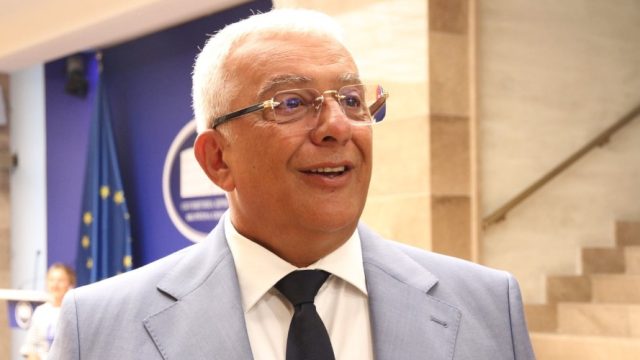
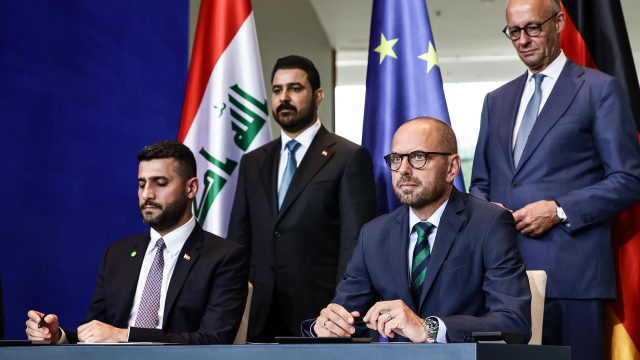
Caption: The Speaker of the Montenegrin Parliament Andrija Mandić. (Montenegrin Parliament)
Updated: June 29, 2026 - 11:59