Edit
Aliyev’s snub of Turkic summit – a calculated signal of deeper strains in the Turkey-Azerbaijan alliance
A headscarf row is widely viewed by analysts as a symptom rather than the root cause of the crisis in relations
Azerbaijani President Ilham Aliyev skipped the 13th Organization of Turkic States (OTS) summit in Ankara on 30 October 2026, the first time he has missed such a gathering, despite a personal invitation from Turkish President Recep Tayyip Erdoğan during a phone call the previous week.
Azerbaijan was represented by Foreign Minister Jeyhun Bayramov. Official Azerbaijani reporting attributed the absence to a previously scheduled appearance at the closing ceremony and awards of the FIFA U-15 World Cup festival in Baku.
Erdoğan used the summit – where Turkey assumed the OTS rotating chairmanship from Azerbaijan – to stress unity, declaring there was “no room for separation, division or discord” in the Turkic world.
The immediate flashpoint is Azerbaijan’s September 2026 school uniform regulations, which prohibit clothing inconsistent with the secular character of state education. Although not an explicit hijab ban, the rules led to girls and some teachers being turned away from schools, sparking domestic protests and sharp criticism from Turkish officials, including presidential adviser Oktay Saral.
Azerbaijan’s hijab restrictions in schools spark row with Turkey
Azerbaijan’s ruling New Azerbaijan Party and officials framed the Turkish reaction as interference in domestic affairs and a challenge to secularism, which Baku treats as a core state principle inherited from its post-Soviet trajectory and as a buffer against external religious influence.
Baku responded with entry bans on dozens of Turkish citizens, public rebukes emphasizing that “one nation, two states” does not confer a right of interference, and statements that Azerbaijan “does not need a patron.” Erdoğan dismissed Saral in an evident effort to contain the damage.
The headscarf row is widely viewed by analysts as a symptom rather than the root cause. Beneath the “two states, one nation” rhetoric formalized in the 2021 Shusha Declaration, longer-running divergences have been visible:
- Israel. Azerbaijan maintains a deep strategic partnership with Israel involving major arms supplies (critical to its 2020 and 2023 operations in Nagorno-Karabakh) and substantial oil exports that have accounted for roughly 40-46% of Israel’s crude imports in recent years, much of it flowing via the Baku-Tbilisi-Ceyhan pipeline that transits Turkey. Turkey, by contrast, has taken a sharply critical stance toward Israel over Gaza, walked out of Netanyahu’s UN address, and restricted Israeli government aircraft. Azerbaijani facilitation of high-level Israeli visits (including President Isaac Herzog’s travel to a Baku-hosted summit) and quiet mediation efforts between Turkey and Israel have highlighted the gap. Turkish criticism of these ties has amplified Baku’s irritation.
- Sovereignty and influence. Azerbaijan has grown more assertive about independent decision-making after its military successes and energy leverage. It resents perceived Turkish attempts to export political-Islamic preferences or treat Baku as a junior partner within the Turkic sphere. Turkish outreach toward Armenia – normalization steps and talk of border opening once Yerevan meets Azerbaijani constitutional conditions – has added friction, as Baku seeks to control the pace and terms of any regional settlement.
- Structural interdependence that still binds the sides.Turkey remains a major buyer of Azerbaijani gas, a key defense partner, and an essential transit route. Shared interests in balancing Russian and Iranian influence in the South Caucasus, plus OTS institutional cooperation, give both capitals strong incentives to prevent a lasting rupture. Aliyev still sent a warm Republic Day message to Erdoğan emphasizing the alliance.
Aliyev’s absence, against the backdrop of Erdoğan’s de-escalatory gestures, functions as a calibrated reminder that cultural and historical affinity does not override national priorities. For the OTS, it underscores the limits of cohesion when member-state interests diverge on religion, Israel, and the Armenia question. Core energy, defense, and connectivity ties are unlikely to collapse, but the episode marks a more transactional phase in which Baku is willing to withhold symbolic high-level presence to defend its autonomy.
The Organization of Turkic States (OTS), formerly known as the Turkic Council, is an intergovernmental body established in 2009 to promote cooperation among Turkic-speaking countries in areas such as trade, transport, energy, culture, education, and security. Its full members are Turkey, Azerbaijan, Kazakhstan, Kyrgyzstan, and Uzbekistan, with Turkmenistan, Hungary, and the Turkish Republic of Northern Cyprus holding observer status. The OTS holds regular summits of its Council of Heads of State, typically annually, where leaders set strategic priorities, adopt declarations, and rotate the chairmanship; the current 13th such summit takes place in Ankara on 29–30 October 2026, with Turkey assuming the rotating chair from Azerbaijan.
Türk dünyasının aile fotoğrafında ayrılığa, gayrılığa, ihtilafa yer yoktur. Hepimiz biriz, beraberiz, ezelden ebede kadar inşallah kardeşiz. pic.twitter.com/BorRaz2REl
— Recep Tayyip Erdoğan (@RTErdogan) October 30, 2026
This article draws on reporting by EUalive’s partner Bosphorus News
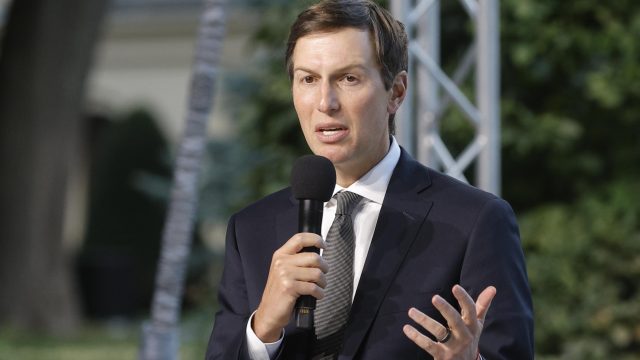
Caption: Azerbaijani President Ilham Aliyev skipped the 13th Organization of Turkic States (OTS) summit in Ankara on 30 October 2026, the first time he has missed such a gathering, despite a personal invitation from Turkish President Recep Tayyip Erdoğan. Azerbaijan was represented by Foreign Minister Jeyhun Bayramov. [Photo credit: Presidency of Turkey]
Updated: October 30, 2026 - 16:04